
Almost every team we work with that puts a Python backend and a React or Next.js frontend on AWS hits the same question early on. Should the containers run on ECS or EKS?
Both of them run your containers. Both scale. Both are solid production choices used by companies far bigger than yours. So the real question isn't which one works, because they both do. It's which one costs you less time and money to run over the next couple of years.
We deploy this stack for startups all the time, and most of the time we reach for ECS on Fargate. Not because Kubernetes is bad, it's genuinely great, but because a lot of teams move to EKS long before the extra complexity pays for itself. Here is how we actually think about the choice.
What you're choosing between
Both services are container orchestrators. They take your Docker images, decide where to run them, restart them when they crash, and scale them up and down. The difference is the level you operate at.
ECS is the AWS native orchestrator. You describe a task (one or more containers, their CPU and memory, environment, and secrets) and a service (how many copies to keep running behind a load balancer). That is most of the mental model. There is no control plane to learn and no cluster software to keep upgraded.
Pair ECS with Fargate and it becomes serverless containers. You don't provision or patch any servers. You hand AWS a task definition and it finds the capacity. You give up some host level control and pay a little more per vCPU hour. For a typical product API, that is a good trade.
EKS is managed Kubernetes. AWS runs the Kubernetes control plane for you for a flat hourly fee, but you still operate Kubernetes itself: Deployments, Services, an ingress controller, the cluster autoscaler, RBAC, and a steady stream of version upgrades. In return you get the whole Kubernetes ecosystem and skills that carry over to any cloud.

Where the real cost shows up
People tend to compare ECS and EKS on the AWS bill. That is the wrong place to look. The EKS control plane runs about 73 dollars a month per cluster and ECS has no control plane fee, but that gap is rounding error next to the cost that actually matters, which is the engineering time it takes to run the thing safely.
A Kubernetes cluster is a system you have to keep healthy. Someone needs to know why a pod is stuck pending, why the ingress controller stopped routing, what changed in the last Kubernetes release, and how to drain nodes during an upgrade without dropping traffic. For a large platform team that is just the day job. For a five person startup it is a second job that pulls your best engineers off the product.
ECS removes most of that surface. There is no cluster to upgrade and far fewer ways to get paged at 2am for something that isn't your code. When we put a client's Django or FastAPI service on AWS ECS Fargate, the same engineers building features can run production without a dedicated platform person.

ECS and EKS, side by side
| ECS (Fargate) | EKS (Kubernetes) | |
|---|---|---|
| Learning curve | Low, tasks and services | High, full Kubernetes |
| Server patching and scaling | None on Fargate | You own the worker nodes |
| Control plane cost | None | About 73 dollars a month per cluster |
| Ecosystem | AWS native (ALB, IAM, CloudWatch) | Vast (Helm, operators, meshes) |
| Portability | AWS only | Runs on any cloud or on-prem |
| Time to first deploy | Days | Weeks |
| Best fit | Most web apps, APIs, workers | Platform teams, many services |
The pattern is clear enough. ECS is built around getting to production and staying there cheaply. EKS is built around flexibility and a portable, standardized platform, at the price of complexity you have to staff for.
Where your Python code fits
The good news for Python teams is that your app doesn't care which one you pick. A Django or FastAPI service is just a container behind a load balancer, and both ECS and EKS run it without complaint.

On ECS, a typical Python service is one task definition behind an Application Load Balancer, with background workers (Celery, RQ, or arq) as a second service on the same image:
{
  "family": "api-web",
  "requiresCompatibilities": ["FARGATE"],
  "cpu": "512",
  "memory": "1024",
  "containerDefinitions": [
    {
      "name": "web",
      "image": "ACCOUNT.dkr.ecr.us-east-1.amazonaws.com/api:GIT_SHA",
      "portMappings": [{ "containerPort": 8000 }],
      "command": ["gunicorn", "app.wsgi", "-b", "0.0.0.0:8000"]
    }
  ]
}
On EKS that same service is a Deployment plus a Service plus an Ingress, which means more files, more moving parts, and an ingress controller you install and keep running. For one API and a worker, that is a lot of ceremony for no real benefit. If you want the full ECS recipe, we wrote one up in deploying Django on AWS ECS Fargate.
Where the React and Next.js frontend fits
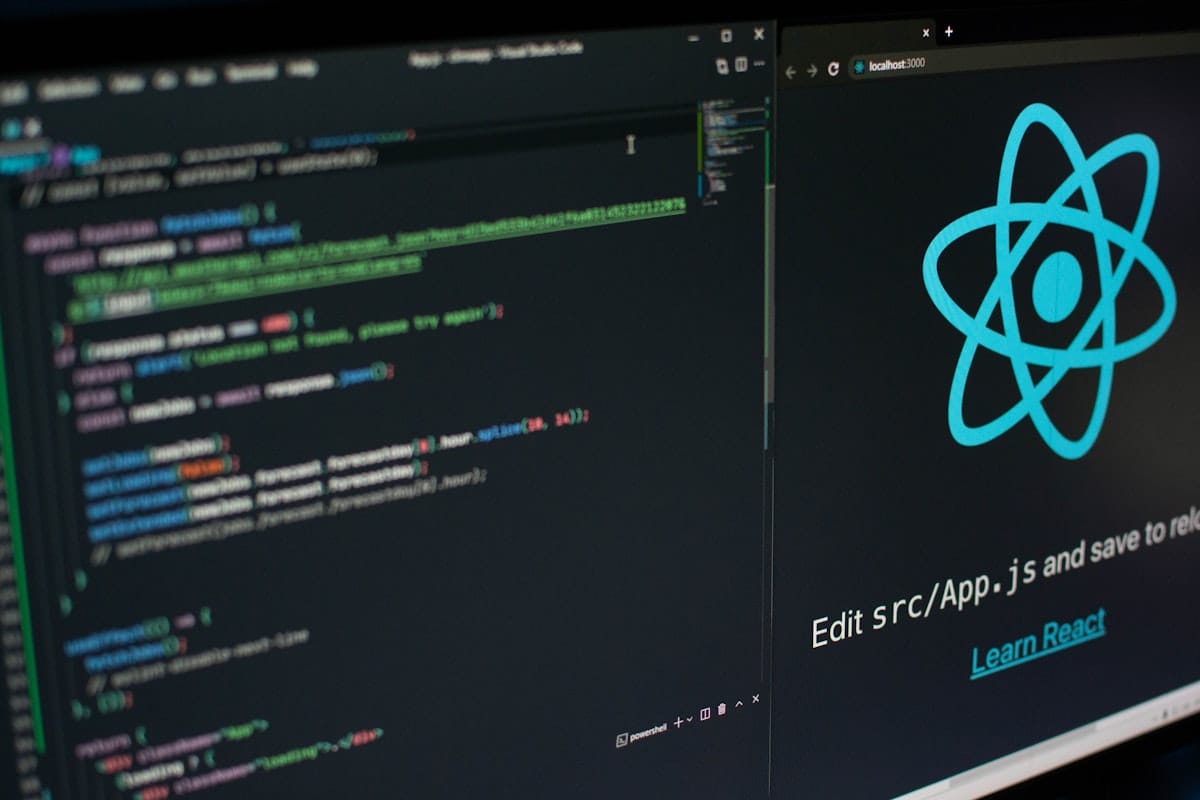
Your frontend usually shouldn't live in either orchestrator. A React or Next.js app that exports statically belongs on S3 behind CloudFront. It's cheap, fast everywhere, and there is nothing to scale. That is how this site is served.
You only need a container for the frontend when you do server side rendering with Next.js. In that case you run it the same way as your API, as a small container service. On ECS that is one more service next to your backend. On EKS it is another Deployment in the cluster. The decision doesn't change. If your backend is happiest on ECS, your rendered frontend will be too.
When ECS is the right call
For most products we see, ECS on Fargate is the answer. Reach for it when:
- You are a startup or small team and want to ship the product, not run a platform.
- You run a handful of services, an API, a worker, maybe a rendered frontend, rather than dozens of interlocking microservices.
- You don't have a dedicated Kubernetes engineer and don't want to hire one yet.
- You are committed to AWS and don't need to move clouds.
- You want the lowest operational overhead and the fastest path to production.
If you are not sure which side you fall on, this is almost always your answer.
When EKS earns its keep
EKS is the right tool once your team and your scale have caught up to its complexity. Choose it when:
- You already have a platform team that runs Kubernetes and the skills are in house.
- You need to run on more than one cloud, or you are moving an existing Kubernetes workload.
- You depend on the Kubernetes ecosystem, like Helm charts, operators for things such as Kafka or Spark, or a service mesh.
- You run many services with complex networking and fine grained autoscaling.
Notice that these reasons are about your team and your scale, not about your code. EKS is worth its complexity when you have the people to absorb it and a real need it answers. Adopting it early just to be future proof is the most common bit of over engineering we get hired to unwind.

You're not locked in
Here is the part that takes the pressure off. The choice isn't permanent. Because your app is just a container, moving from ECS to EKS later is real work but bounded work. You rewrite the orchestration config, where task definitions become Deployments, not the application itself. Teams that start on ECS and graduate to EKS usually do it once they have revenue, traffic, and a platform hire, which is exactly when the trade-offs have flipped.
Starting on EKS so you never have to migrate usually means paying the complexity tax for years to dodge a migration you might never need.
How we'd set it up
When a client comes to us with a Python backend and a React or Next.js frontend, our default looks like this:
- Frontend: static Next.js on S3 and CloudFront, or a small rendered container on ECS if you need server rendering.
- Backend: Django or FastAPI on ECS Fargate behind a load balancer, with workers as a separate service.
- Data: RDS PostgreSQL and ElastiCache Redis, with secrets in Secrets Manager.
- Delivery: everything in Terraform and shipped through CI/CD pipelines, so a deploy is a git push and a rollback is one revision back.
We move to EKS when a client genuinely needs it, and when they do, we run it properly. The skill isn't picking the option that looks impressive. It's matching the platform to your team and your stage so you aren't paying for complexity you don't use.

If you are weighing this for your own product, we are glad to talk it through. We design, build, and run this exact setup. Take a look at our AWS cloud architecture services and our DevOps and container work, or just tell us what you are building and we will tell you honestly what we would run it on. You will be talking to the engineers who would build it, not a salesperson.